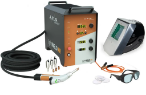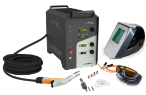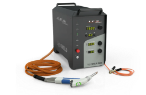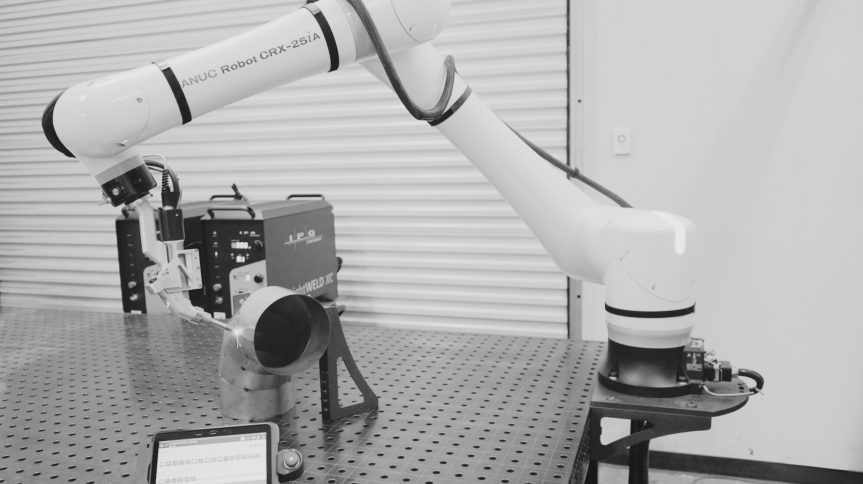
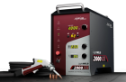
IPG LightWeld Cobot System

Automated laser welding with IPG machines

Automated laser welding offers numerous significant advantages for businesses and workers alike. It notably boosts productivity through the continuous operation capabilities of automated systems, reducing unplanned downtime. Moreover, these systems achieve welds at a higher speed compared to traditional methods, enhancing overall production capacity.

The laser welding process also elevates quality, with microscopic precision that minimizes human errors and produces uniform, defect-free welds. This high level of repeatability and accuracy improves joint integrity and enhances the reliability of finished components, increasing both product performance and customer satisfaction.

Furthermore, automation frees employees from repetitive tasks, allowing them to focus on more complex and strategic activities, promoting innovation and professional growth. Workplace safety is also enhanced with advanced safety features on the machines, reducing the risks associated with manual handling.

In summary, automated laser welding increases productivity and quality, liberates employees for higher-value tasks, and improves safety, thereby bolstering the long-term competitiveness and success of businesses.

The automation of your laser welding tasks

More accessible than you thought

Increased productivity

Continuous operation and higher speed.

Quality improvement

Microscopic precision and uniform welds.

Employee liberation

Focus on complex and strategic tasks.

Improved safety

Advanced safety devices reducing accident risks.

DISCOVER OUR MACHINES IN VIDEO

LightWELD® Cobot Systems

LightWELD® Cobot Systems

shutterstock_1648609885

Would you like to see the automated system in action?

Contact our experts and discover how you can automate your laser welding!

Frequently Asked Questions about Automated Laser Welding

Is laser welding experience necessary?

Not at all. The LightWELD laser welding technology is easy to learn, regardless of your welding experience level. All LightWELD systems come pre-loaded with over 100 welding and cleaning parameters for common materials and thicknesses. You can also create your own recipes to adjust your travel speed and desired weld penetration.

Do I need robotics experience to use a cobot?

The LightWELD Cobot System (LWCS) does not require operators to program with code (though that’s an option if desired). LWCS is typically taught by manually guiding the robotic arm through a welding or cleaning task. The arm can remember hundreds of tasks and will execute the steps and movements for a specific task whenever needed.

Are collaborative robots meant to replace human welders?

No, quite the opposite. Cobots are designed to work alongside humans and assist them in various tasks. The LightWELD Cobot system requires a skilled welder to teach it how to perform various welding tasks. Cobots are like any other tool: they help creators and craftsmen work faster and more efficiently, producing higher-quality finished products.

Why buy a cobot instead of hiring a skilled welder?

The LightWELD Cobot system is designed to help skilled welders be more productive. While the system can handle a wide range of welding and cleaning tasks, it is particularly suited for managing repetitive and less rewarding welding tasks. By working more efficiently with this type of welding, skilled welders can spend their time on more challenging and interesting welds. Additionally, the high repeatability and precision of LightWELD Cobot systems reduce the time welders need to spend on touch-ups and grinding.

Why use a laser welding cobot instead of an arc welding cobot?

Methods in all applications. However, laser welding offers several advantages over MIG & TIG welding:

  • Welding speed up to 4 times faster
  • Reduced heat-affected zone
  • Increased precision and repeatability
  • Minimal post-weld processing required
  • Superior energy efficiency and reduced consumables
  • Less experience required to achieve excellent welds
  • Better results in vertical and overhead welds

What is LightWELD technology?

LightWELD is a portable laser welding and cleaning technology designed to maximize weld quality and productivity. This advanced laser system enables fast, high-quality laser welds with minimal post-processing, making it ideal for various manufacturing applications.

LightWELD and portable laser welding are established solutions for welders and manufacturers worldwide, offering a user-friendly and efficient approach to modern welding processes.

The same LightWELD technology powers the LightWELD Cobot system. If needed, the portable LightWELD system can be disconnected from the cobot system for manual tool-less use.

Is laser welding safe?

Laser welding requires certain safety measures, like any other welding method. Laser welding is safe as long as operators and bystanders wear appropriate personal protective equipment (PPE) and the laser is used in a laser safety enclosure. Safety is a top priority for all LightWELD systems, which come with laser safety glasses and safe welding helmets for lasers. LightWELD laser units include features such as emergency stop buttons, safety interlocks, and easy integration with welding areas to stop the laser if the door is unexpectedly opened.

Can LightWELD weld dissimilar metals or parts of different thicknesses?

Yes, you can easily weld dissimilar metals such as copper to stainless steel or aluminum, as well as parts of different thicknesses across a variety of weld joint types.

What is the duty cycle of LightWELD?

You can use LightWELD at a 100% duty cycle at maximum laser power.

Can LightWELD be used with wire?

LightWELD offers seven operating modes to meet your needs:

  • Wire welding: standard MIG wire is introduced into the laser weld to increase the size of the weld bead or compensate for poor part fit
  • Fusion welding: the laser produces a continuous stream of light for maximum penetration and travel speed
  • Pulse welding: the laser produces light pulses to reduce travel speed and heat input, creating a “stacked bead” appearance
  • Spot welding: the laser delivers a controlled amount of energy to produce identical spot welds
  • Dot welding: used to create multiple or overlapping spot welds
  • Peak high power mode: short bursts of high power are used to weld reflective metals

How do I buy a LightWELD Cobot system?

Purchasing a LightWELD Cobot system is a simple process designed to meet your specific laser welding process and manufacturing needs. Just contact our team, and one of our automated laser welding specialists will assist you with product selection, integration guidance, and system deployment tailored to your welding applications.

Whether you’re working on automotive components, battery modules, or precision joints, we’ll help you define the right configuration, modular or custom, based on your processing needs. We also offer on-site validationinspection support, and training to ensure a smooth transition into automated welding.

Our goal is to help you implement a cutting-edge laser welding solution that improves quality, increases productivity, and reduces costly rework.

Can automated laser welding be used for zero-gap joints or hermetic sealing?

Yes, modern laser welding systems are capable of performing high-precision welds on on very tight-fit joints (quasi zero-gap), when parts are properly prepared. This enables reliable hermetic sealing, which is essential for achieving hermetic sealing in applications like battery modules, medical components, and automotive enclosures. Thanks to the narrow laser beam and real-time monitoring systems, these systems deliver repeatable, high-integrity welds, even on challenging geometries.

What role does real-time monitoring play in laser welding automation?

Real-time monitoring ensures consistent weld quality by tracking variables such as laser beam alignment, seam quality, temperature, and material response during the weld. Integrated vision systems and sensors allow for dynamic adjustment of the laser welding process, reducing the risk of defects and improving overall production efficiency.

Is automated laser welding suitable for high-volume manufacturing?

Absolutely. Automated welding solutions are designed for scalability and can handle high-volume production lines with minimal operator input. Their high-speed capabilities, combined with repeatability and low thermal distortion, make them ideal for industries such as automotive, electronics, and metal fabrication.

Can the laser welding system adapt to different metal components or complex geometries?

Yes, advanced laser welding heads and robotic systems can be programmed to follow intricate paths across complex geometries, adapting in real time to different metal components, thicknesses, and gap tolerances. This flexibility is enhanced by 3D vision systems, adaptive optics, and precise material handling modules.

What makes automated laser welding a cost-effective solution for manufacturers?

By reducing labor dependency, minimizing rework, and enabling seamless integration with existing manufacturing systems, automated laser welding significantly lowers long-term operational costs. It also reduces the use of filler materials, shortens cycle times, and improves throughput, making it a cost-effective solution for both small and large-scale production environments.

Spark & Co partners with robotics giants. What does this mean for our customers?

FANUC LogoBy integrating the expertise of leading industrial robotics partners, including FANUC, a global leader in industrial robots, Spark & Co delivers automated laser welding solutions that combine cutting-edge automation with proven reliability. This strategic collaboration enables the deployment of robotic laser welding cells recognized for their robustness, precision, and industrial performance, ensuring access to advanced technologies for clients seeking to modernize their manufacturing processes and increase operational efficiency.

Adopting automated laser welding transforms the way businesses operate. Through robotic laser welding automation, it allows laser welds to be performed with unmatched speed, consistency, and high precision, significantly boosting productivity. These systems operate continuously, 24/7 if needed, reducing downtime and improving throughput across demanding production lines.

In terms of quality, the laser welding process guarantees accurate, repeatable welds with minimal human intervention. Real-time monitoring systems and optimized laser beam control help detect defects, maintain alignment, and ensure optimal fusion of joints, even in complex or high-precision assemblies.

This level of automation also empowers your workforce. By automating routine tasks, employees can shift their focus to higher-value responsibilities such as process validation, design, or advanced quality control. This enhances not only professional development but also innovation within the company.

Finally, safety is elevated thanks to built-in detection features, motion clamps, and secure enclosures, minimizing risks associated with manual welding. The result is a safer working environment and reduced costs tied to workplace incidents.

In short, automated welding with Spark & Co means faster output, better weld quality, improved worker safety, and greater adaptability to evolving industry demands in automotive battery assembly, metal fabrication, or high-precision component manufacturing.
Equip Your Skilled Welders

AUTOMATE Repetitive Welds
Free up resources by entrusting repetitive tasks to your cobot system, allowing skilled welders to focus on more complex welds.

MAXIMIZE Productivity
Accelerate repetitive welds more quickly and consistently, reduce defective parts, and minimize time spent on grinding and touch-ups.

IMPROVE Your Welders
Enable your welders to accomplish more with a system that complements their skills and optimizes their time.

As Easy to Learn and Use as LightWELD

No Programming Experience Required

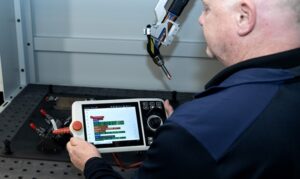
Teach your automated laser welding cobot the necessary steps in just minutes by manually guiding the robotic arm through the desired motion path. Once set, the sequence can be saved at the push of a button, no coding required. This intuitive approach to automation accelerates system deployment, reduces training time, and ensures faster adoption in demanding manufacturing environments.

Control Everything from One Screen

An intuitive interface lets operators manage the full laser welding process from a single location. Users can select and save welding and cleaning presets, fine-tune laser beam parameters, and control robotic movement in real time. Integrated monitoring functions help maintain weld quality and support adjustments across different components, joint configurations, or wire feeding setups.

Modernize Your Workshop

The LightWELD Cobot system offers the flexibility and freedom of movement needed to handle a variety of welds, regardless of your workflow method.

  • Weld Small, Large, Simple, or Complex Parts
  • Weld a variety of joints and materials, even overhead.
  • Weld on the welding table or on adjacent work surfaces.

LightWELD Technology

America’s Most Popular Portable Laser Welding Technology

The LightWELD Cobot system is powered by LightWELD, the same laser technology that has revolutionized portable laser welding and cleaning in workshops across the United States and Canada.

LightWELD laser technology enables welders to weld better and more with a productive, efficient, and easy-to-learn tool.

Comparaison des machines de soudage laser

LightWELD 2000XR
Welding & Cleaning
LightWELD 1500XR
Extended Range
Welding & Cleaning
LightWELD 1500XC
Welding & Cleaning
LightWELD 1500
Welding
LightWELD 1000
Welding
Welding Capability: SteelsStainless, Galvanized & Mild Steel: up to 8 mm (0.315” )Staineless Steel, Mild Steel, Galvanized Steel
6.35 mm (0.250'')
Staineless Steel, Mild Steel, Galvanized Steel
4 mm (0.160'')
Staineless Steel, Mild Steel, Galvanized Steel
4 mm (0.160'')
Staineless Steel, Mild Steel, Galvanized Steel
4 mm (0.160'')
Welding Capability: AluminiumAluminum 3 & 5 Series: up to 8 mm (0.315”)
Aluminum 6 Series: up to 5 mm (0.200”)
Aluminium (3XXX, 5XXX, 6XXXseries)
6.35 mm (0.250'')
Aluminium (3XXX, 5XXX series)
4 mm (0.160'')
Aluminium (3XXX, 5XXX series)
4 mm (0.160'')
Aluminium (3XXX, 5XXX series)
4 mm (0.160'')
Welding Capability: Titanium and Nickel AlloysTitanium & Nickel Alloys: up to 7 mm (0.275” )Titanium and Nickel Alloys
6.35 mm (0.250'')
---
Welding Capability-CooperCopper: up to 3 mm (0.120”)Copper 2 mm (0.080'')---
Wooble WeldingUp to 5 mm widthUp to 5 mm widthUp to 5 mm widthUp to 5 mm widthUp to 5 mm width
Cleaning CapabilityPre- & Post-weld up to 15 mm widthPre- & Post-weld up to 15 mmPre- & Post-weld up to 15 mm--
High Frequency Peak Power for Cleaning3000 W2500 W2500 W--
Wire Welding CapabilityYesYesYesYesYes

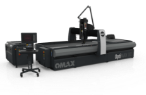
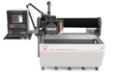
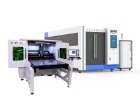
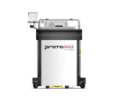
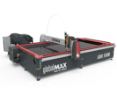
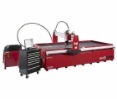
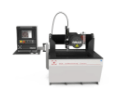
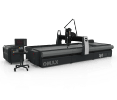
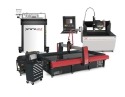
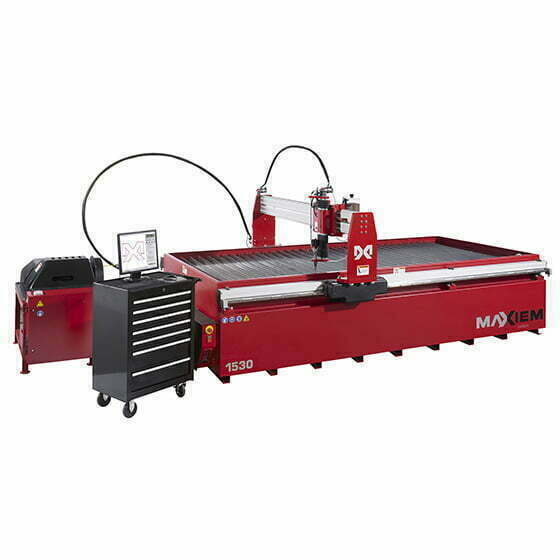
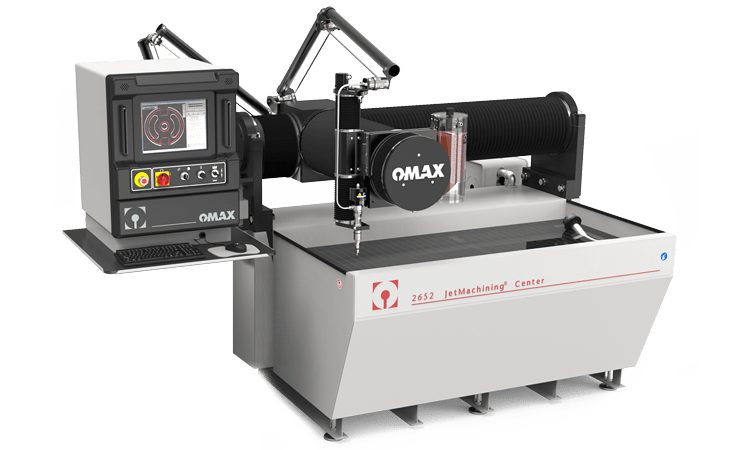
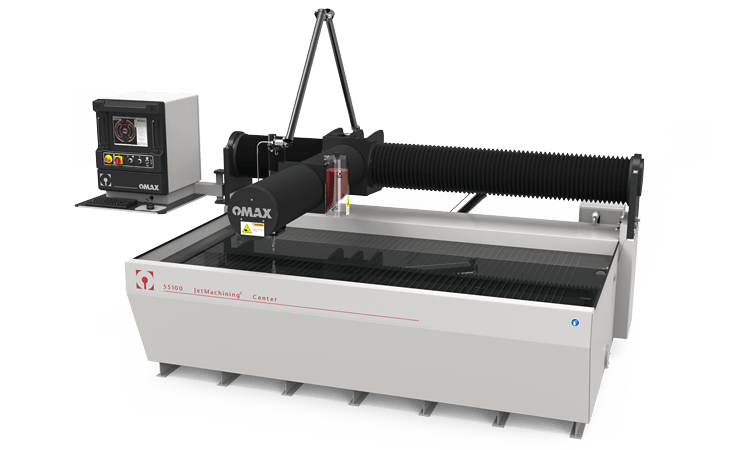
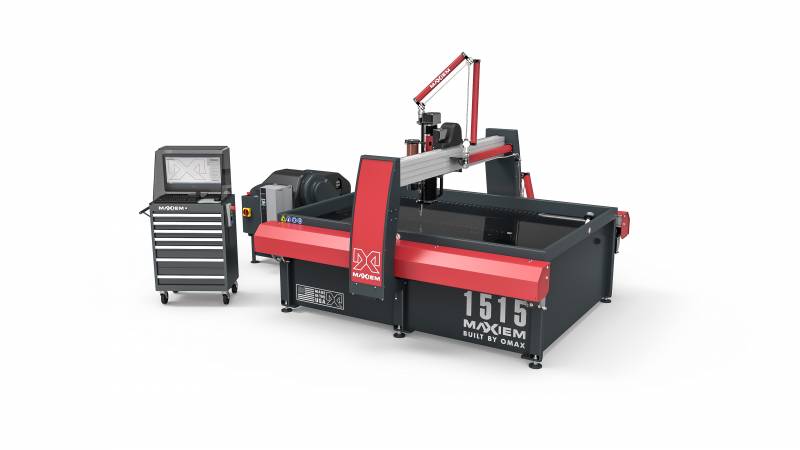
COMPARAISON DES MACHINES DE découpage jet d’eau

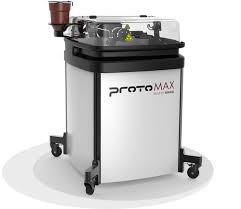
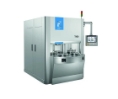
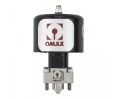
OPTIMAXOMAXMAXIEMGLOBALMAXPROTOMAX
Description du ProduitLa machine à jet d'eau complète utilisant le meilleur de ce que OMAX a à offrir.Le cheval de bataille des jets d'eau, la ligne OMAX offre précision, performance et puissance. Capacité maximale avec la plus large compatibilité d'accessoiresConfiguré pour votre entreprise avec une large compatibilité d'accessoiresJet d'eau abrasif économique avec compatibilité essentielle d'accessoires
3-AxesZ Programmable Z Programmable Z Programmable Z Programmable Z Manuel
5-AxesVersaJET, TiltaJETA-Jet, TiltaJETA-Jet
6-AxesBientôt disponibleRotary Axis with A-Jet/TiltaJET
Buse de CoupeMAXJet 5iMAXJet 5iMAXJet 5iGlobalMAX NozzleProtoMAX Nozzle
Dimensions de la Surface de Coupe10'0" x 5'2" to 13'4 x 6'8"
3.04 m x 1.57 m to 4.06 m x 2.03 m
2'5" x 2'2" to 46'8" x 13'4"
0.73 m x 0.66 m to 14.2 m x 4.0 m
5’2” x 5’2” to 20'6" x 10'2"
0.79 m x 0.77 m to 6.2 m x 3.1 m
2'7" x 5'0" to 13'3" x 6'8"
0.80 m x 1.5 m to 4.0 m x 2.0 m
12" x 12"
0.3 m x 0.3 m
Capacité de Poids sur la Surface de Coupe 400 lbs/sq ft
1950 kg/m2
400 lbs/sq ft
1950 kg/m2
300 lbs/sq ft
1465 kg/m2
100 lbs/sq ft
488 kg/m2
50 lbs/ sq ft
244 kg/m2
Circularité Ballbar±0.003"
±0.076 mm
±0.0025" to ±0.005"
±0.064 mm
±0.005"
±0.127 mm
±0.007"
±0.178 mm
±0.016"
±0.406 mm